
I was very fortunate to have known my great-grandparents. My great-grandfather lived to be 94 years old. He wore these black-rimmed glasses that were about a half inch thick. They looked like the old bottoms of Coke bottles. And my great-grandmother lived to be 98.
Every day they would sit down around that kitchen table for two, and she would read the paper to him. They lived in Atlanta not far from The Varsity, where when you ordered your food, someone turned around and hollered back at the kitchen, “I need a C Dog (chili dog) all the way with a Ring One (onion rings) and an F.O.” F.O. was the best part, a Frosted Orange. It sounded like pig latin. But my great-grandmother’s favorite meal in Atlanta were two C Dogs all the way.
While I was in college at the other town, I would drive over to Atlanta to visit them. It is one of the things for which I am most grateful that I ended up doing.
And sitting in their sunroom one afternoon, my great-grandfather said to me, “Remember, there is always time to do the right thing.” But as I nodded along, I thought to myself, surely there’s not always time to do the right thing. Time runs out. The moment passes. The opportunity is lost.
Those words stayed. Because I do think that even when time runs out, even when the moment passes, even when the opportunity is lost, there is always time to do what is most good.
And Jesus says there’s always time to do what is good. He was at the temple, and elders and chief priests came up to him. They represented the religious authorities. They had formal name badges. They didn’t have to wait through the security line at the temple like the rest of us.
And they asked Jesus, “By what authority are you teaching?” Jesus didn’t have a formal name. And Jesus did not argue. He said, “I’ll answer your question if you answer my question.” And he asked them, “Do you think the baptism of John is from heaven or from humanity?”
And they were stuck. If they said that the baptism of John came from heaven, they couldn’t explain why they didn’t believe John. But if they said it came from humanity, the crowds listening on would have become angry with them because they believed John. So they simply said, “We don’t know.” And Jesus said, “I won’t answer your question either.”
And then he tells them this parable about a man with two sons. The man invited his sons, told them, “Go out into the fields and work.” And the first son said, “I will not.” The second son said, “I’ll go.”
But because there’s always time to do what is good, the first son eventually decided to go into the fields and work. The second son, though, eventually decided not to go. And Jesus asked all the religious authorities, “Who was faithful?” And all of them said, “The first son.”
But they didn’t realize they were condemning themselves because Jesus says the sinners and the tax collectors, they’re like the first son where eventually they decide to go out into the fields and work. And these religious authorities did not fully embrace them.
And we don’t know why the first son delayed his decision. Perhaps he had a run-in that week with one of the other workers and there was this tension in the air. And if he went out into the fields, he’d have to face that worker. And he was afraid about what he would say. And we too hesitate for similar reasons. We worry about what others may think or say. We don’t want to be misunderstood or mislabeled.
Or perhaps the first son was just too busy to go. His attention was split. He couldn’t leave what he was currently involved in at the moment. And we too are surrounded by noise, where it is hard to be still and quiet enough to hear the invitation in front of us.
Or perhaps the first son was upset with the father. Maybe there was a bad conversation around the dinner table the night before and the first son felt unappreciated, making it difficult to do what is good.
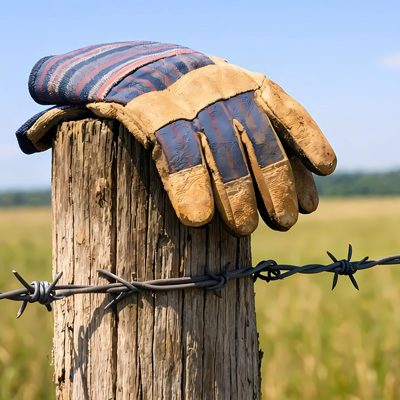
For whatever the reason, love is always hard. It stretches us. As it says in 1st John, “Let us love not in word or speech, but in deed and truth.” And eventually the first son, in deed and truth, grabbed his work gloves.
There is always time to do what is good because there is no expiration date for the grace of God. It’s not like the milk in the fridge where you unsuspectingly open that door and grab the carton but pay no attention to the date and you take a sip and you are unpleasantly surprised. Always checking the date from that day forward.
Grace never expires. There is still time if we want to apologize and make amends. There is still time if we want to care for the poor and the vulnerable using what we have for their assistance. There is still time if we want to make room in our lives for silence and prayer, knowing it will stretch us. There is still time if we want to foster unlikely friendships, seeing the image of Christ in others. There is still time if we want to mend a broken relationship, offering small gestures of love, even when it is hard to do so.
Because it is never too late to do what is most good.
I don’t know about you, but there are some weeks when the piles start to grow on my desk. They sort of take up residence needing their own zip code. And even though I sit behind my desk every day, those piles just start to fade into the background. They’re right there in front of me, but I can’t see them. They just Disappear? Like what?
There are times when the grace of God is right there in front of us, but it fades into the background. Even though it is there, it is hard to see.
And perhaps we can borrow those words of the psalmist and say that prayer ourselves every day or even more than once throughout the day: “Make me to know your ways, O Lord. Teach me your paths.”
We can pray that prayer every day or more than once throughout the day in order to notice the grace of God around us. “Make me to know your ways, O Lord. Teach me your paths.”
We just might hear that invitation again to venture out into the fields. And we might grab our work gloves because it is never too late to do what is good.
Amen.